
Hardscape Surfaces That Stay Level and Intact
Paver Re-Sanding and Sealing in Valparaiso for patios, walkways, and driveways where joint sand has eroded and surface color has faded
Joint sand washes out of paver installations during heavy rain and snowmelt, allowing individual pavers to shift under foot traffic and vehicle weight. Once the sand barrier disappears, weeds root between pavers, ants tunnel underneath, and the interlocking system that provides structural stability begins to fail. Paver re-sanding and sealing restores both the functional integrity and appearance of brick, concrete, and natural stone paver surfaces. PTM Pressure Washing addresses these issues for patios, walkways, and outdoor living areas across Valparaiso where weather and use have degraded the original installation.
The process involves cleaning the paver surface to remove dirt and organic growth, replacing lost joint sand to reestablish the friction lock between pavers, and applying a sealant that protects against weathering while enhancing color. Northwest Indiana's freeze-thaw cycles accelerate joint sand loss as ice expansion pushes material out of the gaps, and spring rains complete the washout, leaving gaps that widen each season until pavers rock visibly underfoot.
Schedule a property evaluation to assess joint sand loss and surface condition before weather further degrades your paver installation.
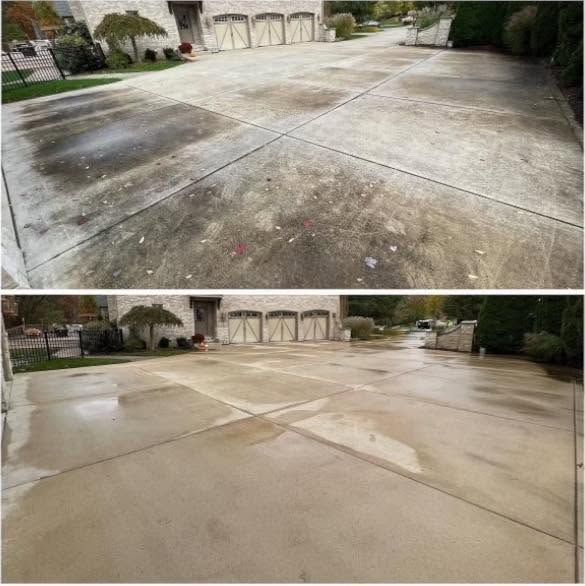
What Happens During Re-Sanding and Sealing
Re-sanding begins with cleaning the paver surface and removing any remaining degraded sand from the joints, then sweeping polymeric sand into the gaps until they're filled from bottom to top. Polymeric sand contains binding agents that harden after water activation, creating a durable joint fill that resists washout and prevents weed growth and insect intrusion. After the sand cures, a penetrating sealant is applied across the entire surface to lock the sand in place, protect the paver face from staining and weathering, and enhance the natural color of the stone or concrete.
After the work is complete, pavers no longer shift when walked on or driven over because the refilled joints restore the interlocking friction that distributes weight across the installation. The surface shows deeper, more vibrant color as the sealant saturates the paver face and eliminates the washed-out appearance caused by UV exposure and water infiltration. Weeds stop growing between pavers because the hardened polymeric sand blocks root penetration, and the sealed surface sheds water instead of absorbing it, reducing the freeze-thaw damage that causes spalling and cracking over time.
Sealing frequency depends on exposure to vehicle traffic, weather, and de-icing salts, with high-traffic driveways requiring resealing every two to three years and low-traffic patios lasting longer between treatments. The sealant wears gradually rather than failing suddenly, so you'll notice the surface beginning to fade and joint sand loosening again as the protective layer thins and requires renewal to maintain both appearance and structural stability.
Questions Before Starting Your Project
Paver installations throughout Lake and Porter counties experience different wear rates depending on traffic, drainage, and weather exposure, so understanding the re-sanding and sealing process helps you plan for long-term maintenance.
What is polymeric sand and why does it work better than regular sand?
Polymeric sand contains binding agents that harden after water activation, creating a solid joint fill that resists erosion from rain and snow while blocking weed roots and insect tunnels, unlike regular sand that washes out continuously and requires frequent replacement without ever stabilizing.
How long does the sealant last before reapplication is needed?
Sealant longevity depends on traffic and exposure, with driveway surfaces requiring renewal every two to three years under vehicle use and freeze-thaw cycles, while patios and walkways in Valparaiso often last three to five years before the protective layer wears thin and surface color begins fading again.
Will sealing change the appearance of my pavers?
Sealant enhances and deepens the natural color of the pavers, making them appear richer and more vibrant while also providing either a matte or glossy finish depending on the product selected, so the surface looks closer to its original installed appearance rather than the faded, weathered state that develops without protection.
Can re-sanding fix pavers that are already uneven or sunken?
Re-sanding stabilizes pavers that have minor movement but does not correct sections that have settled or heaved due to base failure, and those areas require removal, base repair, and reinstallation before sanding and sealing can restore surface stability and appearance across the entire installation.
How soon can the paver surface be used after sealing?
Foot traffic is typically allowed within a few hours once the sealant has dried to the touch, but vehicle traffic should wait 24 to 48 hours to avoid tire marks and surface disturbance, and full cure time depends on temperature and humidity conditions during application.
PTM Pressure Washing restores paver installations where joint sand has eroded and surfaces have lost color and structural integrity. Contact us to review your paver condition and discuss the re-sanding and sealing approach suited to your outdoor living areas, walkways, and driveway surfaces.